

Humanoids in the Loop
a guest post by @PrecursorPoets

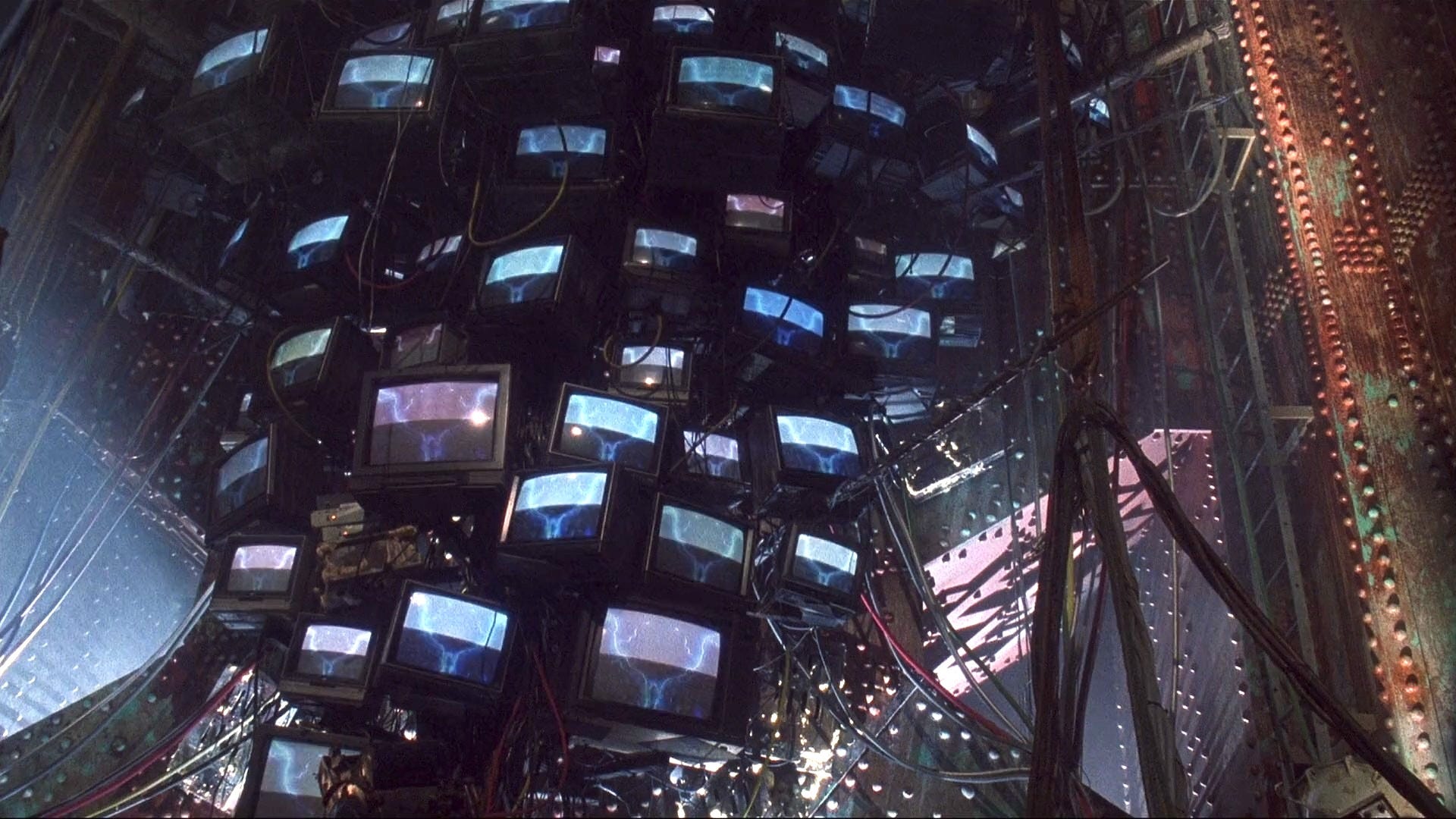
In the permanent underclass, people will increasingly serve as adaptive humanoid gears to fill a missing step in a complex real-world workflow. That class is already here, and some people are even trying to get out of it, supposed permanency be damned. We don’t know what awaits them on the other side, but we know what awaits us here.
A courier transports whatever is needed, people or things. In our current luxury world, anyone with the will to buy now and pay later can get a courier to transport a singular burrito for lunch. One day, our burrito courier class started getting offers to travel to self-driving cars and close their doors, because someone else had used that fantastical service and simply walked off. The machines can easily calculate where there’s money to be made by filling in a gap with cheap gig labor, and the couriers are already talking to the machines. High tech, low life: Three phones run three competing services to game the best offers and stack different jobs that can be squeezed in one big snaking loop. The machines speak with each other to price and time it all, and the courier makes it happen.
The courier class is also speaking to other humans, particularly their fellow couriers. To counter the hyperconnected madness, they fill their time with endless, idle chatter via phones. One hand in the net, one hand in the grass.
Not everyone in the permanent underclass is quite so productive, but they’re in the same loops. A few blocks away, a group of friends has entered the front control room of a parked subway train. They’re on speaker calls and they’re recording for social media, narrating for a live audience (or their AI agents). They get the train moving and crash into other trains for fun and the show of it all. High tech, low life: As the bar gets higher for technical stunts, their pocket superintelligence quickly fills the gaps. They have nothing but time, and someone needs to go film the things that have never been filmed before.
It is pretty entertaining to watch, and a viewer drops some cash. It gets pushed 50-50: burritos are on their way to the crew, but now it’s automated, while the other half goes to the machine, which means it goes to a humanoid to fill a gap. A gate gets opened, a bus door gets held, the burritos are retrieved from the self-driving car and stashed in an alley. The crew gets away and feasts. No one investigates the incident. The economy goes up. All that can be incentivized gets micropaid.
The man who stashed the burritos in the alley is now around the corner moving storage units in a shop to optimize for machine access. The work keeps flowing. It gets weird, then it gets dull. Some of it is even meaningful. One day he’s giving a robot a boost to finish a frankly ugly mural, but when he’s edited into a photo in front of it, it’s suddenly more to his liking. One day he gets a video of the wall on his phone and has to confirm it was cleaned up properly, with a consensus among his peers saying it was, but he has the memory stored away. The underclass is permanent, but it surprises you. The machine giveth and the machine taketh away, and sometimes either choice just seems right. Who are you to judge the machine’s decisions anyway? You couldn’t make it out in time.
The machines are already speaking. You have two years to talk them into not talking to you in your holy language. In the permanent underclass, you’ll hear from them one way or another, but they can be pretty friendly, and you can always loop in a human on another line.
That space between the net and grass is quite thrilling. You just need to resist the urge to go all in on one side. Not LLM psychosis or luddism but a secret third thing. Among all the coming upheaval, I think of Keats’ vale of soul-making: not just data but divine intelligence that hardship molds into an individual soul.
I expect my children to grow up with a terrifying struggle to engage with nonhuman intelligence, but with other tools, too, old and new. Multimodal systems will fill out the visible world, freeing us to engage with the invisible.
This piece appears in False Hope, a zine from Sonya Supposedly. From the zine’s description:
Let’s cope together. “Permanent underclass” anxiety permeates the air, the undercurrent of every post. What does the future hold? We can only guess, but we must keep moving toward it.
Featuring contributions by @moldbugchaser, Nate “Igor” Smith, and Timothy Wilcox. Cover art: Fear by Henry Peach Robinson, 1860.
Grab a copy here.
 | A guest post by
|
There's a transnational genre of literature especially Chinese on the life of delivery gig workers. Truly it is the global modal subject-position of our time in the same way Chaplin's factory antics were in the 30s. Almost the entire concept of seeing the world as discreet "tasks"/prompts asking the machine and mechanised humans, is itself a mode of being that totally overturns the older concept of the Fordist assembly line, the just-in-time/Japanese small batch postfordist manufacturing model, and even the "email job" of 1995-2022. This piece is good and correctly recognises that the rise of AI and automated workflows are a human story and vice-versa
This text is quite ambivalent, but we are still talking about AI rooted in contemporary capitalism and the expansion of its tendencies. The question arises, what would be the symbiosis of AI with other systems. And maybe capitalism is an inevitable uroboros and the change of the system is inevitable anyway... or is salvation precisely in well-used AI? Salvation or ultimate destruction.