

Andrew Tate Is the Loneliest Bastard on Earth
thought digest, 01.21.2026

You’re reading default.blog. An emotional scrapbook of the Internet, technology, and the future.
Every five years or so, there’s a changing of the guard in digital media. Platform empires rise and fall, subcultures come and go, trends ebb and flow.
In my estimation, we’re entering year two of the latest shift.
The decline of punditry and traditional political commentary is continuing apace from its boom during Covid lockdowns. Commentators who might have once labeled themselves clearly conservative or liberal are drifting away from political debate altogether.
It’s increasingly clear that writing is niche. We’re moving away from the age of bloggers and Twitter, and into the age of streaming and clip farming—short video segments, often ripped from longer content, optimized for sharing. (I’ve made this point many times now, but this is why in the world of right-wing digital media, characters like Nick Fuentes are emerging as dominant, whereas no-video podcasters, bloggers, and Twitter personalities receive less attention.)
Labels like “right” and “left” are better thought of as “right-coded” and “left-coded”: ways of signaling who you are and who you’re with, rather than actual positions on what government should do. The people still doing, or more accurately “playing,” politics are themselves experiencing a realignment, scrambling to figure out new alliances as the old divisions stop making sense. I’ve written previously about New Old Leftists and the “post-right,” a motley group of former right-wing commentators who are not “progressives” in the traditional sense, but take up progressive points of view specifically in dialogue with their disgust with reactionary elements of the right.
Anyway, in this rise of coded communities—where affiliation is about vibe and identity more than ideology—we’re seeing the Manosphere go mainstream again. Second time? Third?
But these communities have been online for years, though depending on your vantage point, their underlying ideas are either hundreds of years old or at least sixty. Either way, they keep surfacing into broader culture.
A Short and Non-Exhaustive Timeline of Moments the Pre-Internet Manosphere Penetrated the Mainstream:
The Manosphere as we know it today has at least two distinct antecedents.
The first is the mid-twentieth-century convergence of pick-up artistry and men’s rights discourse. One is a response to the Sexual Revolution and changing dating norms, where the other developed in explicit opposition to second wave feminism. These strands framed gender relations as adversarial, strategic, and zero-sum — AKA “gender discourse.”
The second antecedent is, I think, lesser known. The Manosphere in so many ways is a Black phenomenon. Here I’m not assigning ownership or blame, and I’m also not talking about “the Black Manosphere.” I mean that the aesthetics, anxieties, and philosophies that the Manosphere treats as “new” were first articulated in Black American communities in the 20th century. Then, just as now, these were responses to economic exclusion, social displacement, and the erosion of more traditional masculine status.

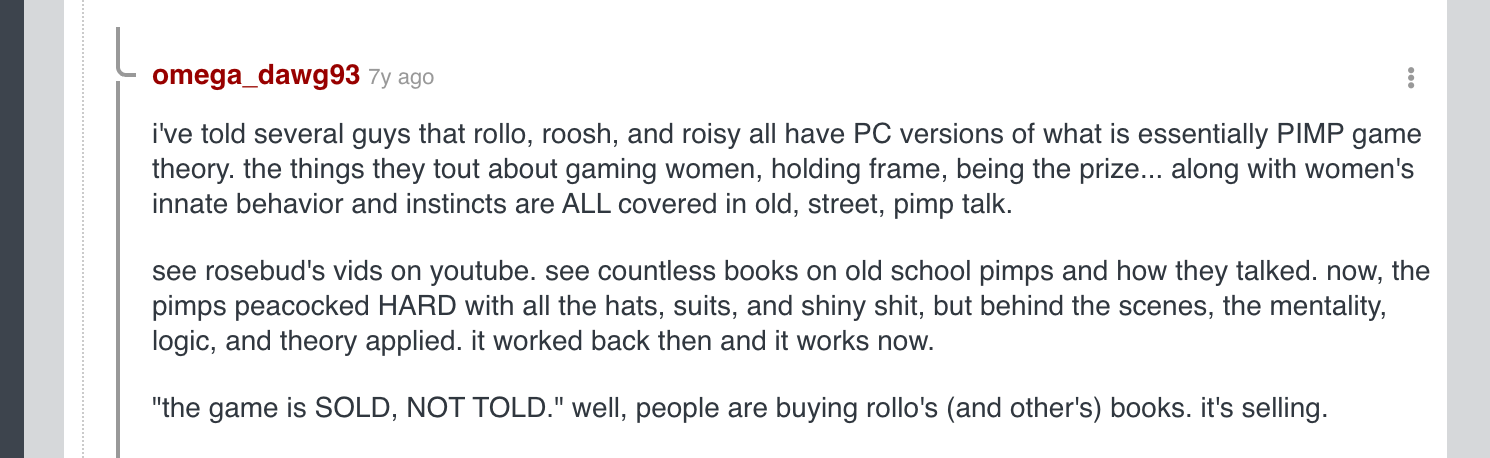
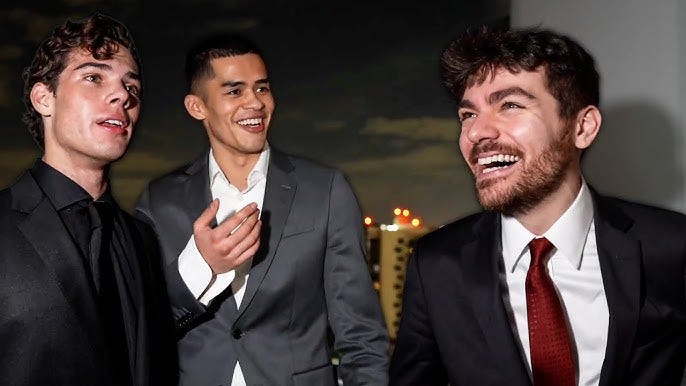
Someone on X made the good point that the viral clips of Clavicular’s Big Night Out—Andrew Tate, Nick Fuentes, Sneako, and company—felt like a child’s idea of not only masculinity, but wealth. The cigars, the suits, the VIP table, the ham-fisted advice about how you don’t take women out to dinner.
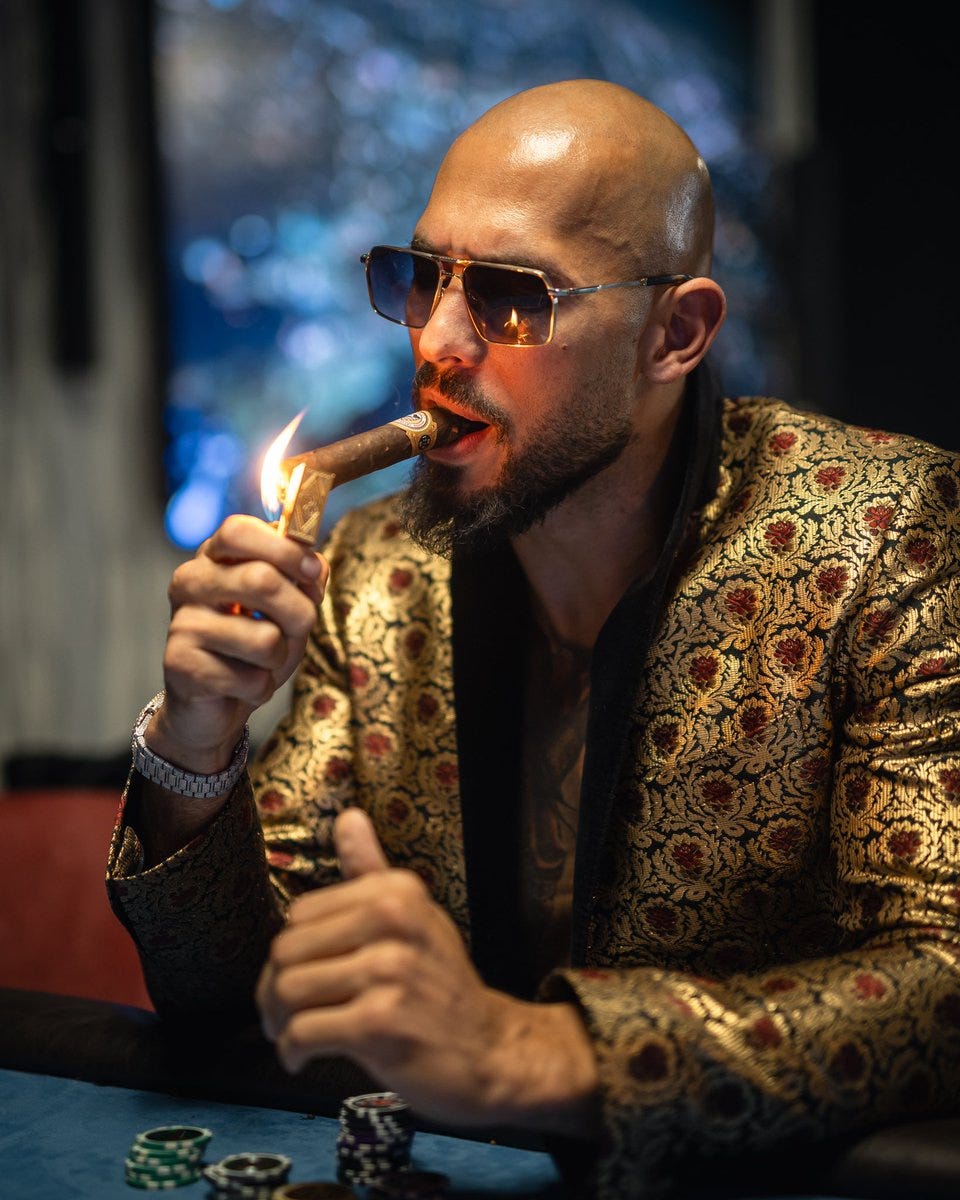
If you’ve read Iceberg Slim, or watched 1970s blaxploitation films like The Mack or Super Fly, the visual language is immediately recognizable— fur coat, Cadillac Eldorado, lavish displays of wealth. Why did that aesthetic look the way it did?
Because Black men weren’t able to signal wealth and success the way white people did — through country clubs, elite universities, white collar work — they adopted flashy fashion to say they’d made it. The fur coat was the shorthand to say, “Look, I can afford this,” because the more traditional signifiers weren’t available to them.
The modern Manosphere inherits this aesthetic. So, what began as a response to being locked out of legitimate power gets recycled, but this time as timeless masculine truth. And so, to modern audiences, it reads as immature.
The aesthetic was codified in the late ‘60s.
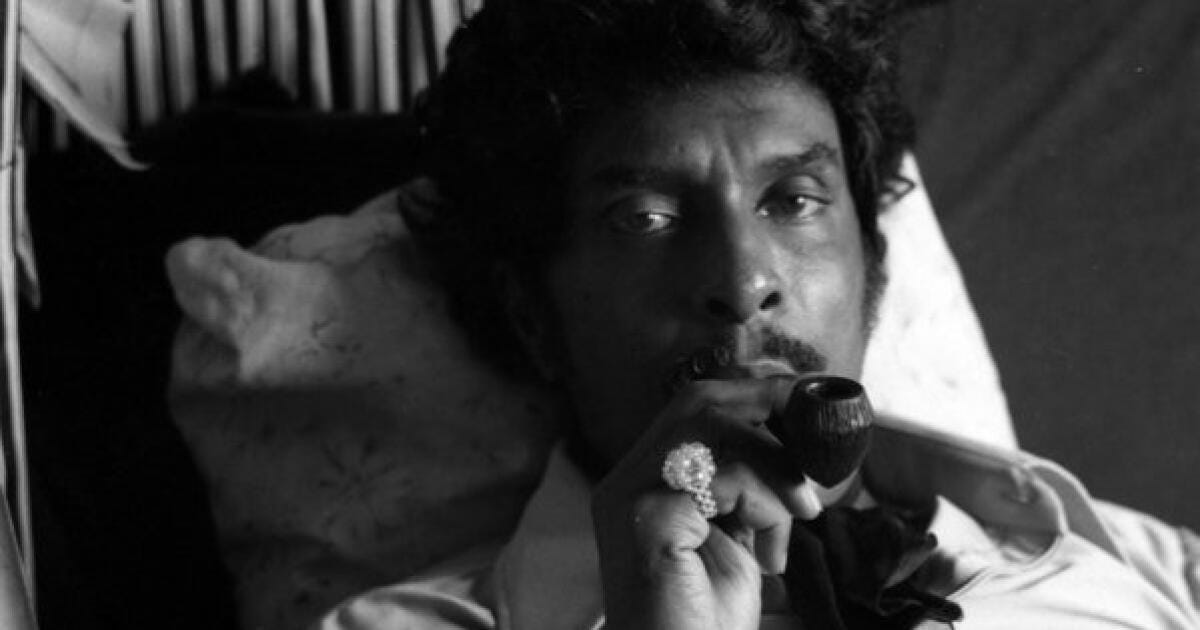
Robert Beck, who became better known as Iceberg Slim, published Pimp: The Story of My Life in 1967, two years after the Moynihan Report was leaked to the press.
The Moynihan report became the subject of furious debate among civil rights leaders, Black nationalists, and white policymakers. Daniel Patrick Moynihan, who was then the Assistant Secretary of Labor, argued that the “deterioration of the Negro family” produced what he called a “tangle of pathology,” and that was at the heart of Black poverty.
Both Slim’s book and the report were responding to the same thing—Black men didn’t have access to the economic foundations of traditional masculine identity, and they needed something to replace them.
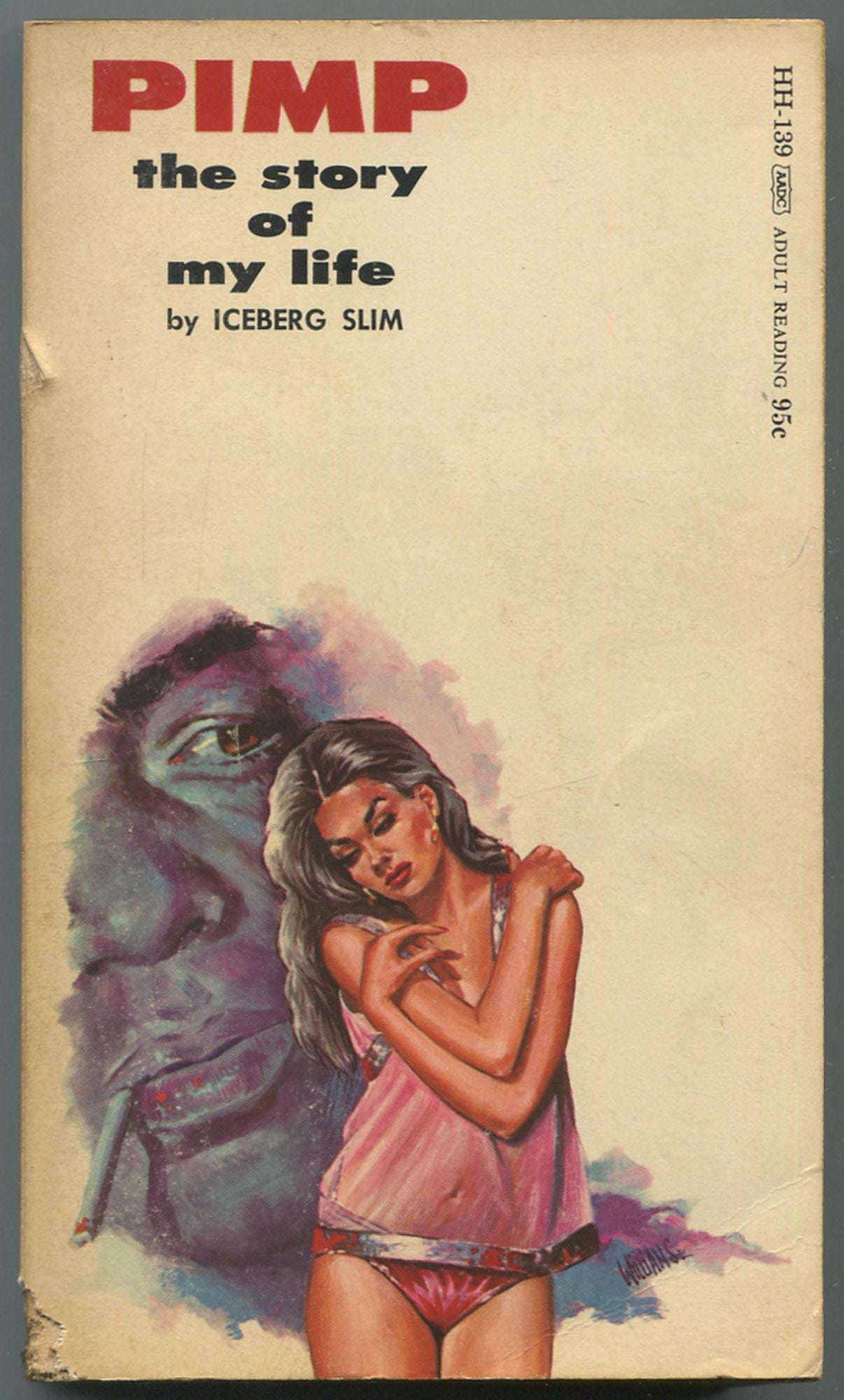
According to Beck, the pimp is “the loneliest bastard on earth,” a man who must “be God all the way” to his women. The pimp was never vulnerable, never soft, and was always performing omnipotence. This became a template for Black masculinity.
By the 1970s, blaxploitation films helped turn the pimp into an outlaw folk hero, emphasizing style over the moral complexity. Hip-hop — which I admittedly know very little about, so please feel free to correct me here — did something similar. Ice-T named himself in tribute to Iceberg Slim. Snoop Dogg built an entire persona around the pimp. The rest is history. Slowly, the pimp stopped representing the Black underclass and became embraced as an unironic symbol of male success, available for adoption by anyone, regardless of their race.
The “high-value man” in Manosphere discourse is this same archetype, but he’s been somewhat re-fit for modern tastes. But the logic and the conditions that support the High-Value Man are idenitcal to the pimps.
Women are resources to be managed, emotional detachment is strength, and a man’s worth is measured by both his displays of wealth and his control over female attention.
This isn’t a totally new connection — Manosphere forums routinely recommend Pimp as essential reading, noting that leading figures are simply teaching “old, street, pimp talk” in sanitized form. The oldheads in the Manosphere knows where its ideas come from. Gen Z and perhaps Millennials have simply forgotten why they emerged.
The genealogy exists in the Manosphere’s female spokespeople, too.
Pearl Davis, the young white podcaster who has become one of the Manosphere’s most prominent female voices, sounds exactly like Shahrazad Ali, the Black author whose 1989 book The Blackman’s Guide to Understanding the Blackwoman provoked national controversy. Ali’s book was published during the crack epidemic, while incarceration rates for Black men began an exponential climb. There was a real sense of crisis that pervaded discussions of Black family life.
What made Ali’s book so explosive, and so useful to her critics, was that she agreed with Moynihan’s diagnosis. Where Moynihan had argued that Black “matriarchy” had produced that “tangle of pathology,” Ali argued that Black women emasculated Black men. Where Moynihan suggested that restoring Black male authority was essential to family stability, Ali argued that Black women should submit to male authority, which meant accepting male infidelity as natural, and returning to traditional homemaking. She even suggested that Black men should beat their women into compliance.
Ali appeared on The Phil Donahue Show to defend these positions to a stunned audience, and her book sold hundreds of thousands of copies despite being rejected by mainstream publishers. The original provocateur.
Davis makes the same arguments stripped of their racial specificity: women are too independent, feminism has ruined them, they need to submit, their standards are delusional. It’s striking to watch videos of them back to back, they’re saying the same things!
The Manosphere’s grievances are not manufactured and neither were the pimp’s. The conditions that produced the pimp archetype in Black America are now conditions we all experience.
The Manosphere exists because millions of young men — of every race — are asking the same question Black men were asking in 1965: what does masculinity mean under economic precarity?
Late in life, Iceberg Slim shared that he believed the game had damaged him — he had internalized a hatred of women stemming from childhood trauma, describing his pimp career as a prolonged act of self-harm. The pimp archetype emerged from real deprivation and produced more deprivation, never liberating anyone but redistributing suffering downward—not only onto women but to men.
Today’s Manosphere offers a diluted, algorithmic version of the pimp.
This is what a man looks like when all other options are gone.
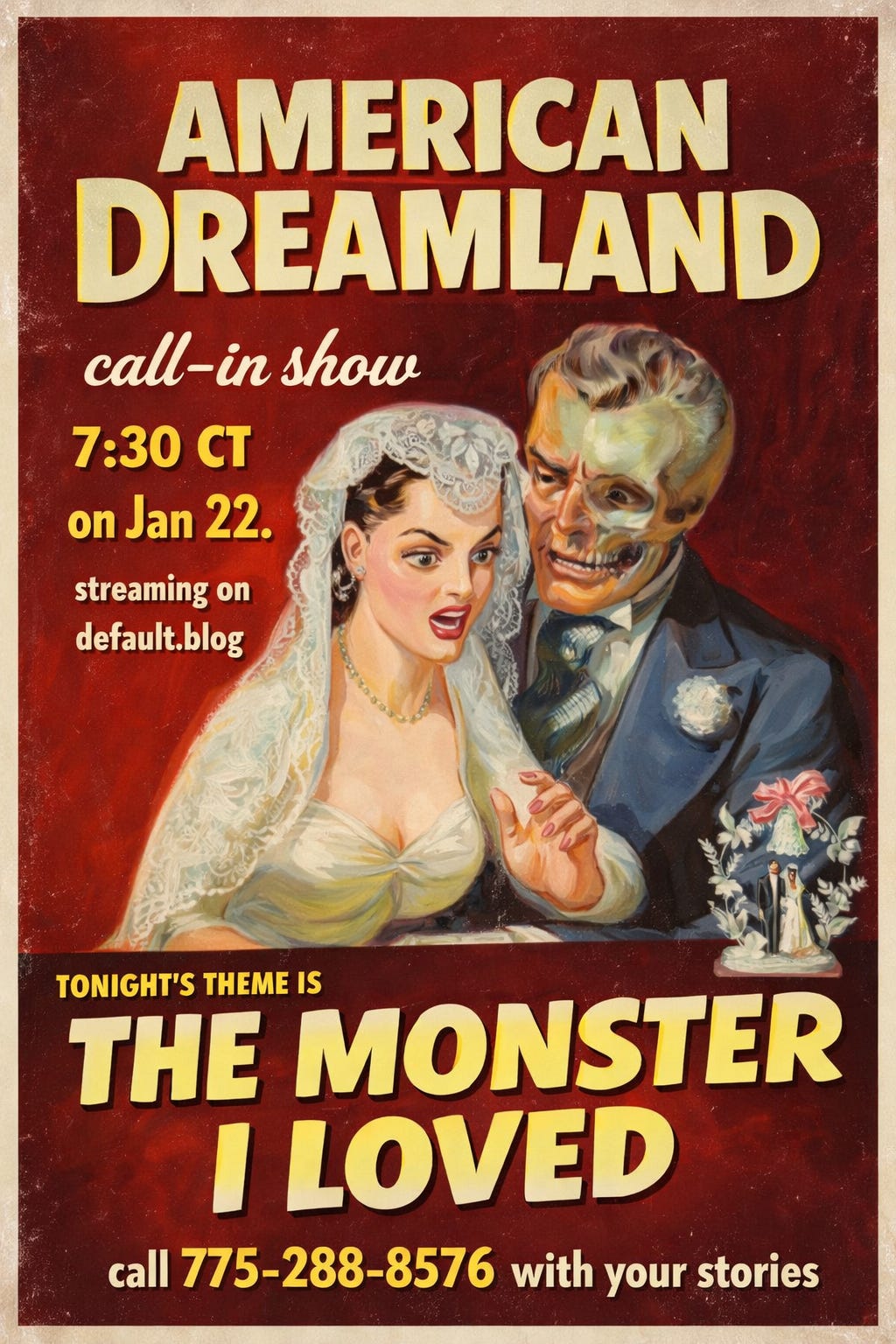
TOMORROW’S CALL-IN SHOW!!!
American Dreamland, my Coast to Coast AM-inspired call-in show with Taylor McMahon, is BACK tomorrow night at 7:30 PM Central. We stream here, on X, Twitch, Rumble, Kick, TikTok, and YouTube. If you’d like to be involved in our marketing efforts, please send me an email at katherine@default.blog. I am very irresponsible!
Tomorrow’s theme is THE MONSTER I LOVED. Call 775-288-8576 with your stories.
ME AROUND THE WEB
I was on [SIC] Talks today, looking adorable. Thank you Ben Dietz for having me!
A while back, I had the honor of going on the Reason podcast. I sound like an absolute lunatic here but I love their program.
The Spectator was kind enough to publish my eulogy to my father. I cannot tell you how much I miss him.
Friend reminded me of this classic, the OG PUA! https://www.youtube.com/watch?v=tuLRIMnGNoI
This post should really be widely talked about. It puts a problem in a historical perspective, and reframes the manosphere issue. Great writing!