

Against American Diner Gothic
is america "weirding" or did we just come up with a new name for an old type?

The discourse around “American Diner Gothic” has mostly been personal observations about the author, his dating life, his class position, his motivations. None of that is very interesting or productive. What is interesting is the subcultural argument, because that’s where the essay makes its strongest claims—and where it gets something important wrong about the history of alternative culture in America.
“American Diner Gothic,” published in The New Atlantis and newly viral on X, coins a term for what author Robert Mariani sees as a new American archetype: the “dinergoth.”
[people in original photo requested removal]
Diner for provincialism, goth as (his word) “lazy shorthand” for alternative aesthetics. Mariani — as always — has a way with words. I remember, with fondness, when he shared with me the name of his podcast, “The Joe Rogan Experience 2.”
Anyway, argument is that economic stagnation killed upward mobility for an entire generation, regional culture died at the same time, and internet-native subculture flooded into the void. The result is a new type of person—a pierced, anime loving, neurodivergent, downwardly-mobile downwardly mobile young person living in flyover America, someone he describes “as distinctive as the organization man or the valley girl once were.”
The article is littered with statistics — half of 18-to-29-year-olds are living with their parents. Gen Z homeownership at 27 is 33 percent, compared to 41 percent for Boomers at the same age. Forty-two percent of Gen Z watches anime weekly; only 25 percent follows the NFL. Regional accents are dying. Geographic mobility is at its lowest rate since the Census started tracking it.
What was once a bunch of separate subcultures — goth, anime fan, queer, gamer, neurodivergent — has collapsed into a more ambient cultural register. On that point, he’s mostly right. He’s also right the Internet has played a significant role in re-shaping some of these subcultures. What’s not real is that this is a new type of person.
There is an unstated assumption running through the essay — or at least through the conversation around it — that these interests and identities originated somewhere cosmopolitan and migrated outward into the provinces as regional culture died. This is wrong, or at least badly overstated. Anime fandom, goth, queerness, neopaganism, “neurodivergent” identities: these were never exclusively coastal phenomena, and their mass base was always suburban and exurban. They did not arrive in the same places Mariani describes; they grew up there.
But I want to be fair to what Mariani is doing, because it’s more ambitious than the backlash gives him credit for. There’s real insight here. The data is solid. The observation that formerly separate subcultures have blended into something more ambient and less defined is mostly right. It’s also true, and important, that the internet helped kids give names to how they were feeling without the vital information that how they were feeling was fleeting because they were 13. The easy aestheticization of angst, above and beyond what you might get from TV or zines, made it even more attractive. How many of us modeled our angst after stuff we saw online?
What Mariani is describing is not the emergence of a new type, but a change in scale and visibility. Platforms collapsed distinct subcultures into a single feed, flattening boundaries that once mattered. What looks like a new archetype is, in many cases, an old one made ambient.
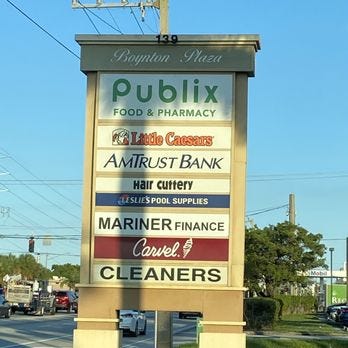
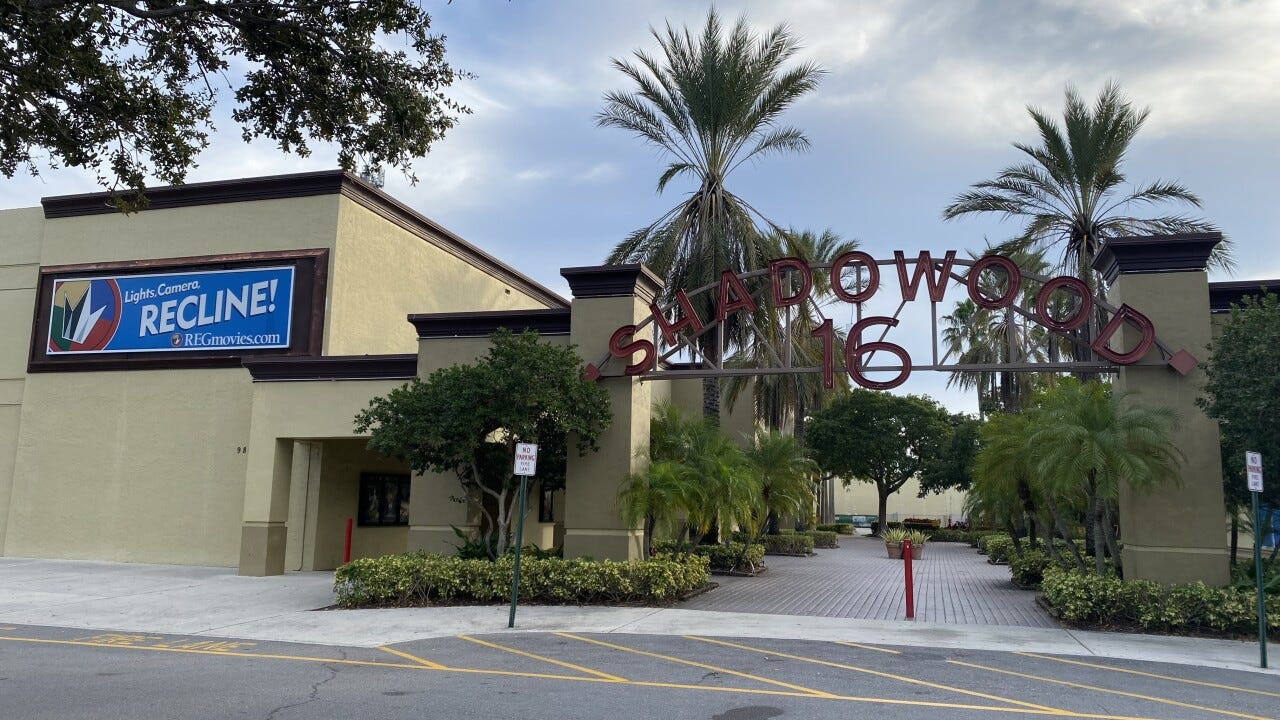
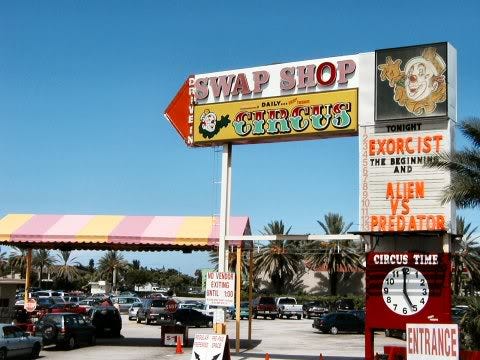
I grew up in South Florida. I came of age in the sprawl of Broward and Palm Beach County, along six-lane roads lined with identical shopping plazas, each one anchored by a Publix. The neighborhoods have names like The Hamptons or Broken Sound, names that gesture at leisure and arrival, and what they contain is either McMansions so far out of your price range as to be dizzying, or, more likely, concrete-block houses, a lanai facing a canal, and a school your realtor assured your parents was excellent. Everything was built fast and all at once, whole zip codes raised out of nothing in a few years during the ‘80s boom, and by the time I got there in 1996 the gulf between the haves and have-nots was miserably, uncomfortably obvious.

South Florida is one of those places where extreme wealth and poverty exist on the same street, albeit separated by a gate and a guardhouse and alligators who won’t hesitate to eat your toddler. On one side of the street, there are gated country clubs with artificial lakes and professional landscaping. On the other side, there’s older subdivisions where families double-up in a single family home and the elementary school has a cop in the hallway.
My mother spent my whole childhood trying to shield me from the latter. But the thing about South Florida is that the poor kids and the rich kids shared the same geography of decline — the “place without places” — and the decline was already well underway before the internet had anything to do with it.
South Florida always had the ambience of downward mobility, and it looked the same whether you wore a Korn shirt or Lacoste.
In Florida, there was always the “alt” kid from a rough home — white, Latino, Jewish, whatever. You could identify them by kindergarten. In my generation, the weird one whose mom let them listen to Eminem, at the time genuinely scandalous, or watch Freddy Krueger movies or Jerry Springer, at the time genuinely taboo-breaking. Or maybe their mom wasn’t around enough to stop them. The kid with the anime shirt when anime in 2004 was rare enough that owning a Naruto figurine was a social statement. The girl with the cat ears. You always knew these kids. If you went to a prep school like Pine Crest or St. Andrews, or even one of the better public schools, your parents didn’t want you hanging out with them.
Your parents worried because these kids had the problems of downward mobility. The parent who was never there or a sketchy stepdad with tattoos and a blue-collar job. The house that smelled like cigarettes, or like nothing, because nobody cooked and Burger King was the law of the land. And you were drawn to them anyway, because they were interesting, because they liked the things you liked, because they were free, and that freedom was magnetic. Maybe you’d end up at their house after school and something about the place would feel both thrilling and wrong: you got to drink Smirnoff Ice or smoke weed, the rooms were empty, the ever-present hum of a ceiling fan pushing around air that was too dry.
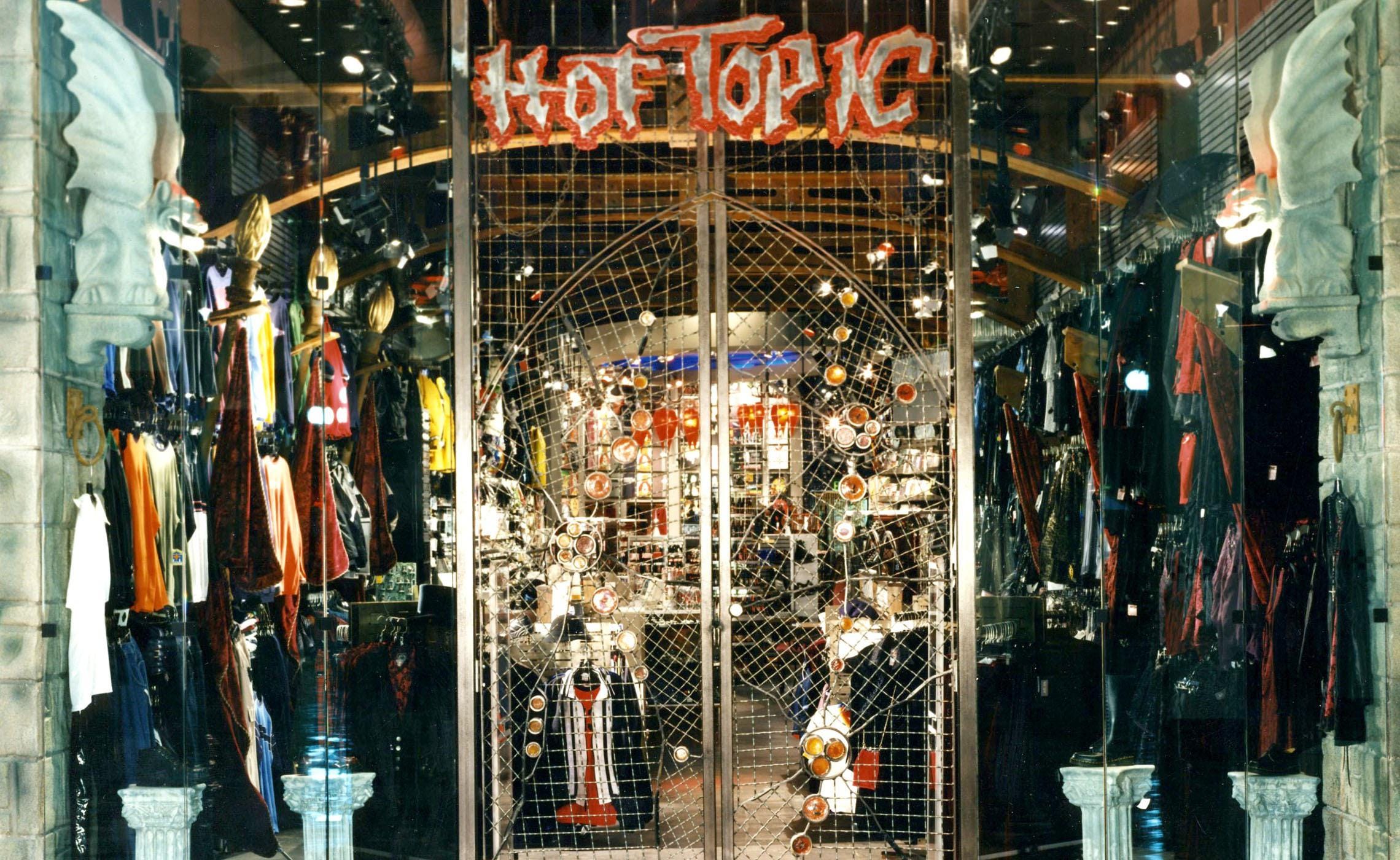
Your curiosities, because you were 8 or 14 or 16 or even 21, visiting home from college, were things like: where are these kids buying the cat ears? Where did they find that choker? How do they know about Inuyasha? It turned out they were going to the Hot Topic at the far-away mall, the one that was considered the “trashy” one. Hot Topic opened in 1989. The founder was from Alton, Iowa, and his whole business model was to bring downtown alternative culture to suburban mall kids who would never see downtown. By 2005, Hot Topic was making almost a billion dollars a year. This was only briefly an urban thing, and it was an urban thing before Rob and I were born. What was ultimately mainstreamed was specifically suburban and exurban. The infrastructure for distributing alt identity to provincial America predates the commercial internet. It’s a chain store that opened when the Berlin Wall fell.
This type has been recognizable for almost thirty years, probably longer. The Craft came out in 1996. The protagonists of hte craft are outcasts at a suburban high school. One of them, Nancy, lives in a trailer park with her abusive stepfather and alcoholic mother. Witchcraft — a stand-in for fringe culture — is where the girls find power and confidence. More “legitimate” paths are closed to them. The Craft didn’t invent an aesthetic, though. It worked because it was something audiences already recognized. It just added a magical patina.
Many of the original goths weren’t kids in big cities — they were kids in forgotten places, finding each other through record stores and shows and word of mouth. (I’d be remiss if I didn’t also say that the ones in big cities were also, well, forgotten kids.)
The West Memphis Three is an extreme case, but it’s another example of this pattern. Damien Echols was an 18-year-old who lived in one of the poorest areas of the country, a trailer park in Marion, AK. Echols was a ‘90s goth. He read horror novelists, like Anne Rice and Stephen King, he was a Wiccan, he wore band tees and all black. The cops in AK thought that was evidence he was dangerous, a thug. So, in 1993, when three boys were murdered, Echols became the primary suspect, despite there being no physical evidence. The proof was that they stereotyped him based on his “goth” interests — this is where the persecution complex some Gen X goths and pagans have. There was a time when, yes, actually, people did think you were a real danger to society. Echols was sentenced to death and spent almost 20 years on death row before DNA evidence exonerated him.
It should go without saying that this isn’t what Mariani is doing. But this type has long been in exactly the places he treats as newly encountering it.
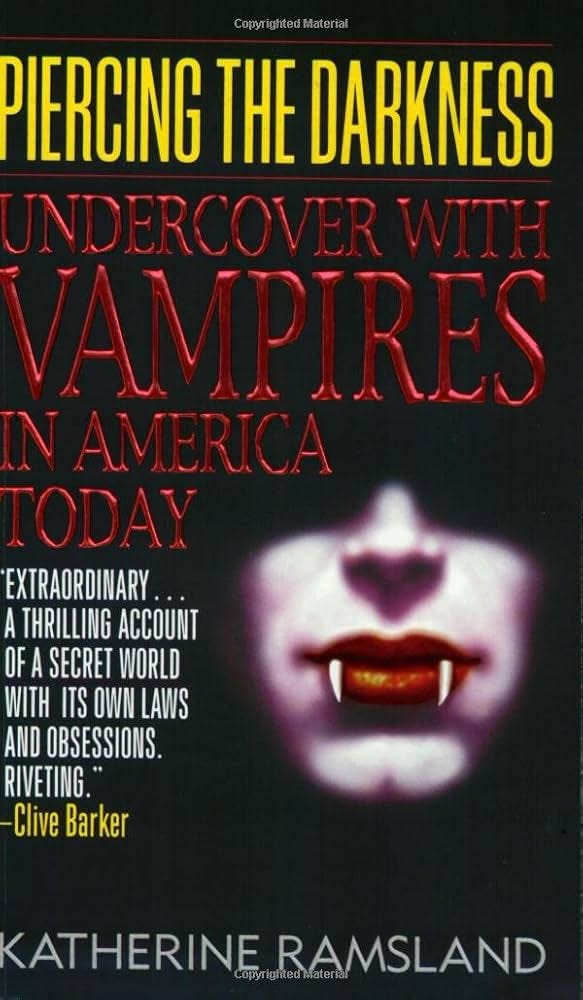
Alt kids are the social fabric of the most economically depressed, culturally conservative corners of America and have been for a very long time.
Even the internet part of this story is older than Mariani suggests. Before Discord there was Tumblr and before Tumblr there was LiveJournal. As far back as the late 1980s, Usenet newsgroups like alt.goth were already gathering the same kind of person: the misfit in a rural town, looking for someone else like them. Earlier still, BBSes and zines served the same function.
I’m repeating myself here, but the internet didn’t create this type. It gave it continuity.
I wrote about one aspect of the online dimension in my piece “Adam Lanza Fan Art” for Tablet, which traced how small, insular communities migrated across platforms over time. Mariani’s right that Discord is a huge development. Discord’s social dynamics—private, persistent, role-based, pseudonymous—are different than the social dynamics on forums, subreddits, or locked groups on sites like LiveJournal, or much later, Facebook.
This is what’s new about the 2020s:
